Need black mold removal in Tinton Falls?
Send a request and a local mold provider will follow up with next steps. Prefer to talk? Request a callback to check provider availability.
No obligationMold Remediation Referrals in Tinton Falls and the Tinton Falls area
Request an estimate to get matched
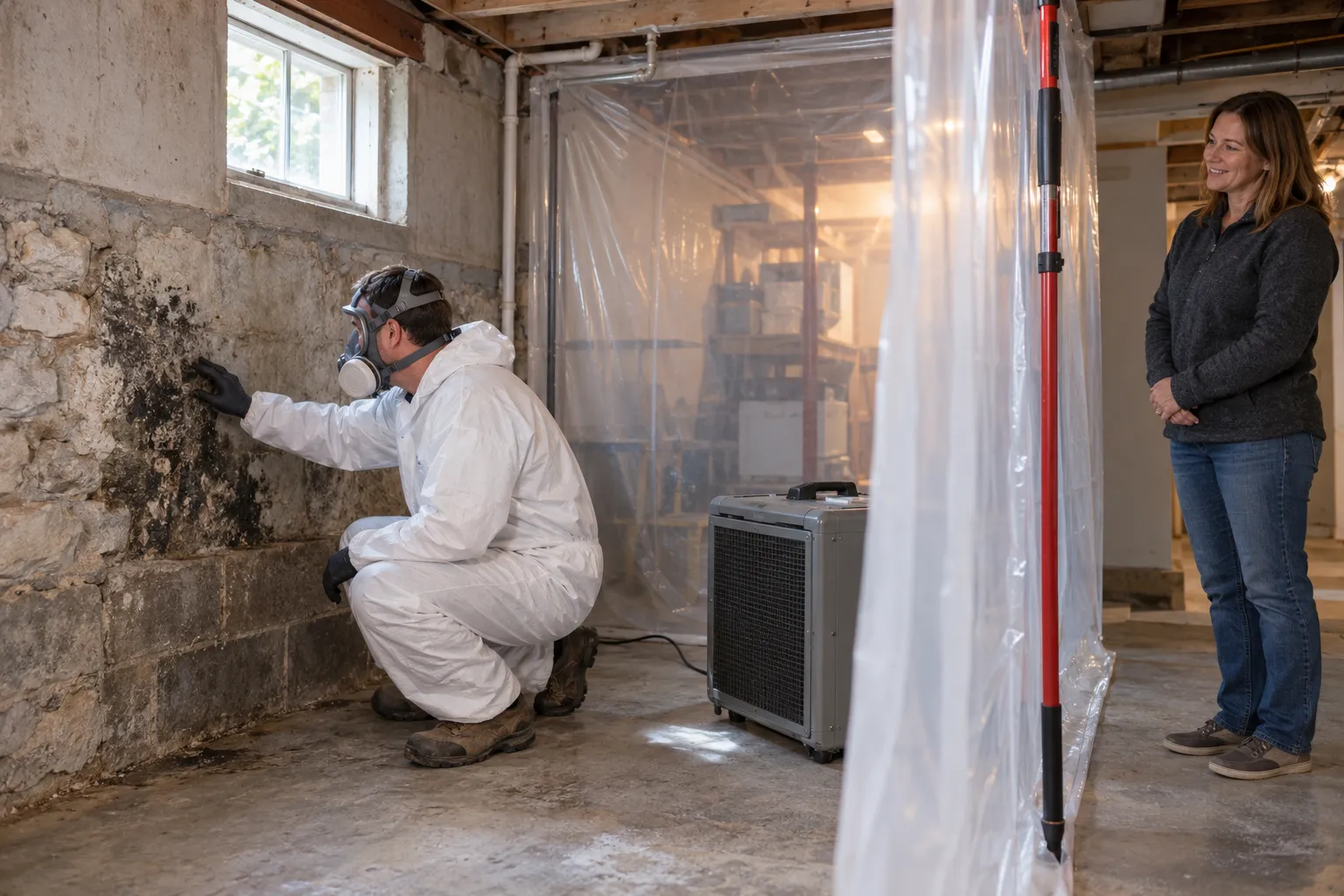
Black mold is a common name for dark, slimy growth that often shows up after long moisture. It can look like other molds, so a provider checks it before deciding how to handle it. Removal is work for trained people with containment gear, not a weekend scrub.
Episodeopens Mold Help is a referral service. We do not remove mold. You send a request, we match it to an independent provider in our network, and that provider gives you a written quote. Many providers can respond quickly, and they plan visits around school runs and work hours. You stay in control of the choice. There is no obligation to hire the provider you are matched with.
Dark growth on a wall or ceiling is a reason to act. It is not a reason to panic. Do these things first:
Then send your request. A provider can tell you what you are dealing with.
Episodeopens Mold Help is a referral desk. We do not inspect, test or remove mold. Independent providers in our network do that work. The steps are simple: request, match, quote. You tell us about the problem. We route it to a local provider. The provider contacts you with a written quote. You decide what happens next.
"Black mold" is a nickname. It usually points to a type called Stachybotrys, but many other molds also look dark. Color alone proves nothing. A provider may take samples to confirm the type. The treatment plan depends more on how much has spread and what it is growing on than on its name.
It needs a damp, organic surface that stays wet for days. In cold, snowy regions, those spots are common:
Drywall paper, wood, insulation and ceiling tile give it the most to feed on.
Look for a musty smell, dark speckles, peeling paint, bubbling plaster and stains that return after cleaning. Some people notice coughing, a stuffy nose or itchy eyes indoors. If anyone in the home has asthma or a weak immune system, talk to a doctor too.
Bleach works on hard, smooth surfaces. Mold on drywall, wood and fabric sits below the surface. Bleach can leave the roots behind, and the water in it can feed regrowth. Scrubbing also lifts spores into the air. If the moisture source remains, the stain tends to come back in weeks. That is why a provider treats the cause as well as the stain.
Process details vary by job. A typical residential mold removal looks like this:
Removal without a fix is a short-term result. Ask the provider to point out the water source. It might be a leaking pipe, a failing gutter, a cracked foundation wall, a roof leak or a damp crawl space. Some repairs belong to a plumber, roofer or waterproofing contractor. A good provider says so plainly.
Busy households need low disruption. Tell the provider about work hours, school drop-offs and nap times. Many jobs can be staged so you keep using the rest of the house. Ask which rooms to avoid, how long the machines will run and when the area is safe to use again. Small jobs may take a day or two. Larger ones can take longer.
Hard items like glass, metal and plastic can usually be cleaned. Soft items like upholstered furniture, rugs and paper boxes are harder. Ask the provider what can be cleaned on site and what should go. Photograph anything you plan to discard.
Some policies may cover sudden damage, such as a burst pipe. Slow leaks are often treated differently. Check your policy. Providers can often help document damage for a claim, so keep photos, notes and quotes in one folder.
If you also want a mold inspection near me before deciding, ask the matched provider what they offer. Send your request and compare the written quote at your own pace.
Sheeting and filtered air machines help keep spores out of the rest of your home.
Wet drywall, insulation or wood that cannot be cleaned is cut out, bagged and carried away.
Fine-filter vacuums and damp wiping pick up dust and spores left behind after the removal.
The provider points out likely water sources so the mold has less chance to return.
Prices vary by size, material, access and location. These are typical U.S. ranges only. Ask for a written quote that lists the scope, so you can compare offers fairly.
| Item | Typical range | Notes |
|---|---|---|
| Small spot (under 10 sq ft) | $500 – $1,500 | Often one area, such as a bathroom wall |
| Single room | $1,500 – $4,000 | Depends on drywall and ceiling damage |
| Basement or crawl space | $2,000 – $7,000 | Size and moisture control drive the price |
| Attic | $1,500 – $6,000 | Roof decking and insulation add to the work |
| Whole-home or severe case | $10,000 – $30,000 | Multiple areas and rebuilding may be needed |
| Testing or air sampling | $300 – $1,000 | Lab fees may be extra |
Tell us what you see, where it is and how long it has been there.
Your request is routed to an independent provider in our network who serves your area.
The provider reviews the job and sends a written quote with the scope listed.
You pick the time that suits your household and the provider plans the work.
We say up front that we refer. Independent providers do the work.
Each matched provider gives you a written quote, so you can compare scope and price before deciding.
Providers can plan visits around your work, school and family routines.
Requesting an estimate does not commit you to hire the provider you are matched with.
Send a request and a local mold provider will follow up with next steps. Prefer to talk? Request a callback to check provider availability.
No obligationIt can be a concern, especially for people with asthma, allergies or weak immune systems. Color alone does not show how risky a mold is. A provider can assess the growth. Talk to a doctor if anyone feels unwell.
A very small patch on a hard surface may be manageable with care, but larger areas or growth on drywall and wood are better left to a provider. Scrubbing can spread spores and miss the moisture source.
Small jobs may take a day or two. Larger basement, attic or whole-home jobs can take longer, especially with drying and rebuilding. The provider can give a time estimate in the written quote.
Send a request and a local mold provider will follow up with next steps. Prefer to talk? Request a callback to check provider availability.
No obligation